
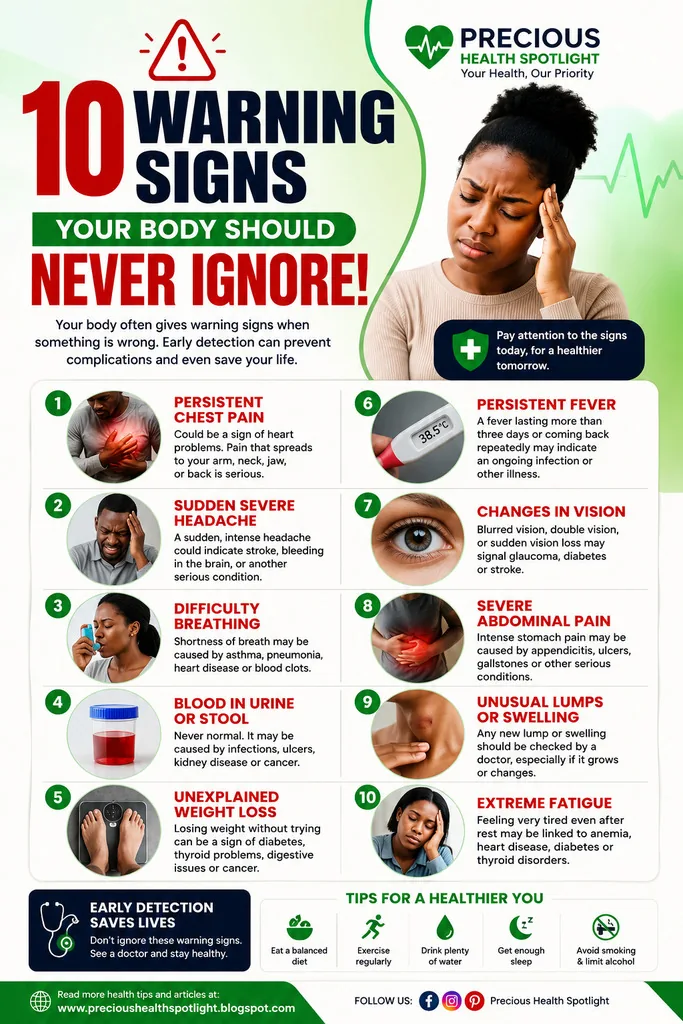
Your body often sends warning signals when something is wrong. While not every symptom indicates a serious illness, some signs should never be ignored because early diagnosis and treatment can prevent complications and even save lives. Here are ten important warning signs everyone should know.
1. Persistent Chest Pain
Chest pain that lasts for several minutes or keeps coming back may be a sign of a heart attack, angina, or another heart condition. If the pain spreads to your arm, neck, jaw, or back, seek emergency medical attention immediately.
2. Sudden Severe Headache
A sudden, intense headache unlike anything you've experienced before could indicate a stroke, bleeding in the brain, or another serious condition. If it occurs with confusion, difficulty speaking, or weakness on one side of the body, get urgent medical help.
3. Difficulty Breathing
Shortness of breath that develops suddenly or becomes severe may be caused by asthma, pneumonia, heart disease, or a blood clot in the lungs. Breathing problems should always be taken seriously.
4. Blood in Urine or Stool
Blood in your urine or stool is never normal. It may result from infections, ulcers, hemorrhoids, kidney disease, or certain cancers. A healthcare provider should evaluate this symptom promptly.
5. Unexplained Weight Loss
Losing a significant amount of weight without changing your diet or exercise routine can be a warning sign of diabetes, thyroid disease, digestive disorders, or cancer. Medical evaluation is important to identify the cause.
6. Persistent Fever
A fever that lasts more than three days or repeatedly returns may indicate an ongoing infection or another underlying medical condition. Persistent fever should not be ignored, especially if it is accompanied by chills, weakness, or dehydration.
7. Changes in Vision
Blurred vision, double vision, sudden vision loss, or seeing flashes of light may signal glaucoma, retinal problems, diabetes-related eye disease, or stroke. Early treatment can help prevent permanent vision loss.
8. Severe Abdominal Pain
Intense abdominal pain may be caused by appendicitis, gallstones, pancreatitis, stomach ulcers, or other serious conditions. If the pain is severe or persistent, seek medical attention immediately.
9. Unusual Lumps or Swelling
Any new lump, swelling, or mole that changes in size, shape, or color should be examined by a healthcare professional. Early detection is essential for diagnosing many conditions, including cancer.
10. Extreme Fatigue
Feeling unusually tired despite getting enough rest could be linked to anemia, heart disease, diabetes, thyroid disorders, depression, or chronic infections. Persistent fatigue deserves medical attention.
When Should You See a Doctor?
Never ignore symptoms that are severe, persistent, or suddenly appear. While some warning signs may have harmless causes, only a qualified healthcare professional can determine the exact reason through proper examination and testing. Seeking medical care early often leads to better outcomes and can prevent serious complications.
How to Protect Your Health
- Schedule regular medical check-ups.
- Eat a balanced, nutritious diet.
- Stay physically active.
- Drink enough water every day.
- Get 7–9 hours of sleep each night.
- Avoid smoking and limit alcohol consumption.
- Manage stress through healthy activities such as exercise, relaxation, or hobbies.
- Seek medical advice whenever you notice unusual symptoms.
Conclusion
Your body communicates with you every day. Paying attention to warning signs and acting quickly can make a significant difference in your health. Never ignore persistent or severe symptoms, and encourage your loved ones to do the same. Early diagnosis and timely treatment save lives.
Disclaimer: This article is for educational purposes only and should not replace professional medical advice, diagnosis, or treatment. Always consult a qualified healthcare provider if you have concerns about your health.
https://precioushealthspotlight..com/2026/08/10-warning-signs-your-body-should-never-ignore.html
1. Persistent Chest Pain
Chest pain that lasts for several minutes or keeps coming back may be a sign of a heart attack, angina, or another heart condition. If the pain spreads to your arm, neck, jaw, or back, seek emergency medical attention immediately.
2. Sudden Severe Headache
A sudden, intense headache unlike anything you've experienced before could indicate a stroke, bleeding in the brain, or another serious condition. If it occurs with confusion, difficulty speaking, or weakness on one side of the body, get urgent medical help.
3. Difficulty Breathing
Shortness of breath that develops suddenly or becomes severe may be caused by asthma, pneumonia, heart disease, or a blood clot in the lungs. Breathing problems should always be taken seriously.
4. Blood in Urine or Stool
Blood in your urine or stool is never normal. It may result from infections, ulcers, hemorrhoids, kidney disease, or certain cancers. A healthcare provider should evaluate this symptom promptly.
5. Unexplained Weight Loss
Losing a significant amount of weight without changing your diet or exercise routine can be a warning sign of diabetes, thyroid disease, digestive disorders, or cancer. Medical evaluation is important to identify the cause.
6. Persistent Fever
A fever that lasts more than three days or repeatedly returns may indicate an ongoing infection or another underlying medical condition. Persistent fever should not be ignored, especially if it is accompanied by chills, weakness, or dehydration.
7. Changes in Vision
Blurred vision, double vision, sudden vision loss, or seeing flashes of light may signal glaucoma, retinal problems, diabetes-related eye disease, or stroke. Early treatment can help prevent permanent vision loss.
8. Severe Abdominal Pain
Intense abdominal pain may be caused by appendicitis, gallstones, pancreatitis, stomach ulcers, or other serious conditions. If the pain is severe or persistent, seek medical attention immediately.
9. Unusual Lumps or Swelling
Any new lump, swelling, or mole that changes in size, shape, or color should be examined by a healthcare professional. Early detection is essential for diagnosing many conditions, including cancer.
10. Extreme Fatigue
Feeling unusually tired despite getting enough rest could be linked to anemia, heart disease, diabetes, thyroid disorders, depression, or chronic infections. Persistent fatigue deserves medical attention.
When Should You See a Doctor?
Never ignore symptoms that are severe, persistent, or suddenly appear. While some warning signs may have harmless causes, only a qualified healthcare professional can determine the exact reason through proper examination and testing. Seeking medical care early often leads to better outcomes and can prevent serious complications.
How to Protect Your Health
- Schedule regular medical check-ups.
- Eat a balanced, nutritious diet.
- Stay physically active.
- Drink enough water every day.
- Get 7–9 hours of sleep each night.
- Avoid smoking and limit alcohol consumption.
- Manage stress through healthy activities such as exercise, relaxation, or hobbies.
- Seek medical advice whenever you notice unusual symptoms.
Conclusion
Your body communicates with you every day. Paying attention to warning signs and acting quickly can make a significant difference in your health. Never ignore persistent or severe symptoms, and encourage your loved ones to do the same. Early diagnosis and timely treatment save lives.
Disclaimer: This article is for educational purposes only and should not replace professional medical advice, diagnosis, or treatment. Always consult a qualified healthcare provider if you have concerns about your health.
https://precioushealthspotlight..com/2026/08/10-warning-signs-your-body-should-never-ignore.html
👍 1