
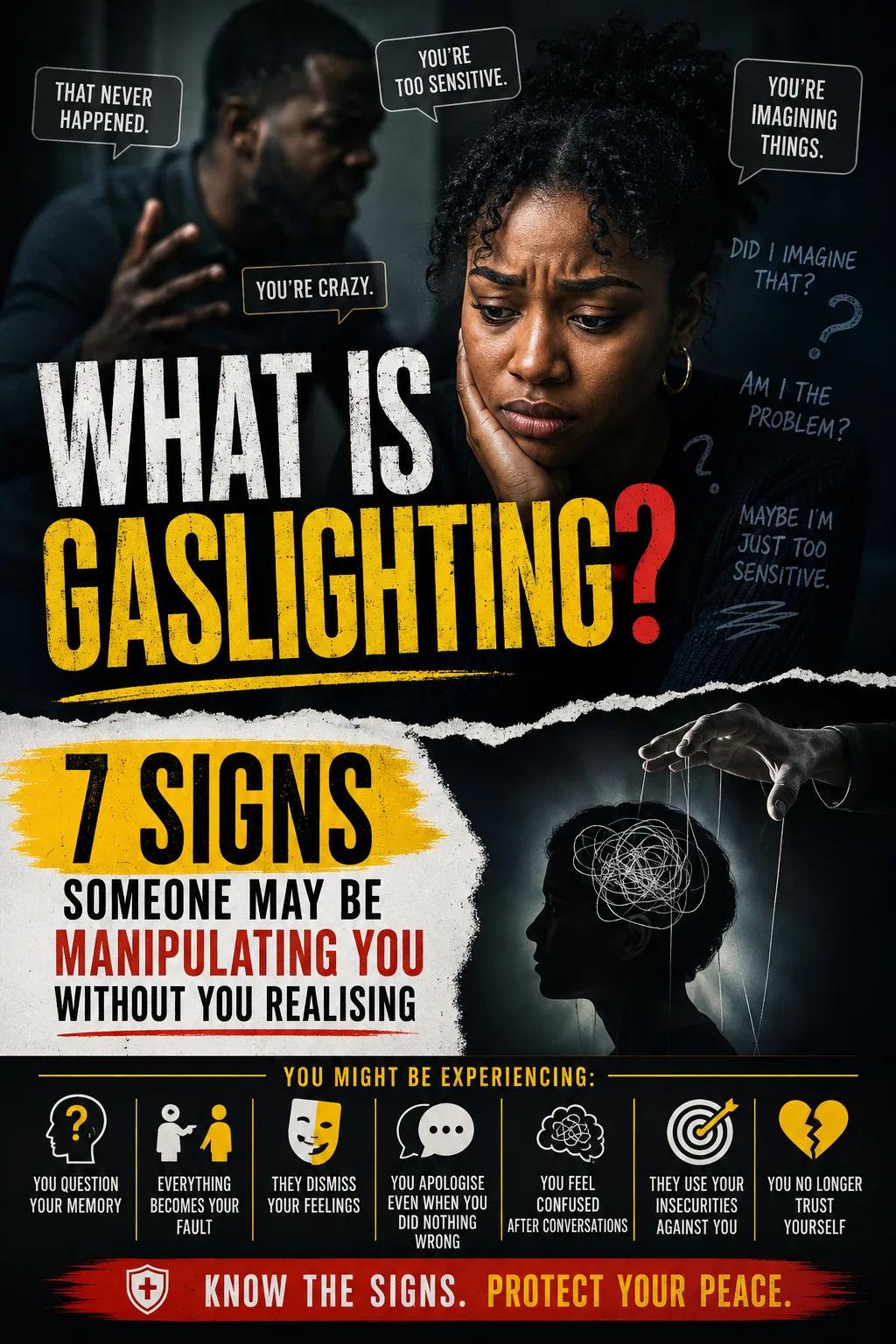
What Is Gaslighting? 7 Signs Someone May Be Manipulating You Without You Realising
You may have heard the word “gaslighting” everywhere online, but what does it actually mean? Here’s how to recognise it, understand the difference between gaslighting and a normal disagreement, and protect your peace.
Have you ever had an argument with someone and walked away thinking:
“Wait… did I actually do something wrong?”
Or maybe you clearly remember what happened, but the other person keeps insisting that it never happened.
Perhaps they tell you that you're “too sensitive,” accuse you of imagining things, or somehow turn every conversation about their behaviour into a conversation about what you supposedly did wrong.
Sometimes, people simply disagree or remember situations differently.
But when someone repeatedly manipulates you in a way that makes you question your own memories, feelings, judgement or understanding of reality, that can be gaslighting.
Gaslighting is a form of emotional manipulation in which someone causes another person to doubt their perceptions or understanding of events.
And it isn't limited to romantic relationships. It can happen between friends, family members, colleagues and other people in your life.
So, What Exactly Is Gaslighting?
In simple terms, gaslighting is a repeated pattern of manipulation that makes you question yourself.
For example, imagine you confront your partner because they insulted you during an argument.
Instead of addressing what they said, they respond:
«“I never said that. You're always imagining things.”»
You show them the message where they said it.
They reply:
«“You're taking it out of context. You're becoming crazy.”»
One disagreement doesn't automatically mean you're being gaslit.
The important thing is the pattern.
According to Cleveland Clinic, gaslighting generally involves repeated behaviours such as denying events, shifting blame, questioning someone's judgement and making them doubt their own perceptions.
7 Signs You May Be Experiencing Gaslighting
1. You Constantly Question Your Memory
You remember something clearly.
But every time you bring it up, the person insists:
“That never happened.”
Over time, you may begin wondering whether your memory is actually the problem.
Repeatedly causing someone to doubt their perception or memory is a key feature of gaslighting.
2. Somehow, Everything Becomes Your Fault
You raise a legitimate concern.
Instead of discussing it, the person changes the conversation until you are defending yourself.
For example:
You: “Why did you lie to me?”
Them: “If you weren't so controlling, I wouldn't have to hide things from you.”
Now you're no longer discussing the lie.
You're apologising for being “controlling.”
Shifting blame and making someone feel responsible for another person's behaviour can be part of a gaslighting pattern.
3. They Tell You That You're “Too Sensitive”
You explain that something they said hurt you.
Instead of listening, they repeatedly tell you:
- “You're too sensitive.”
- “You're overreacting.”
- “It was just a joke.”
- “You always make everything a big deal.”
- “You're imagining things.”
One person making a bad comment doesn't automatically mean gaslighting.
But when dismissing your feelings becomes a repeated strategy for avoiding responsibility, it can become a serious warning sign.
4. You Start Apologising Even When You Don't Know What You Did Wrong
This is one of the most confusing parts.
You may find yourself saying:
“I'm sorry.”
Even though you're still not sure what you did.
You simply want the argument to end.
Over time, repeated manipulation can cause a person to lose confidence in their own judgement and become increasingly dependent on the other person's version of events.
5. You Feel Confused After Almost Every Serious Conversation
A healthy disagreement can be uncomfortable.
But eventually, both people should have a clearer understanding of what happened.
With gaslighting, you may leave conversations feeling:
confused, guilty, anxious or unsure of yourself.
You may replay the conversation repeatedly in your head:
“Maybe I misunderstood.”
“Maybe I'm actually the problem.”
“Maybe I shouldn't have said anything.”
Those feelings don't prove that gaslighting is happening, but repeated confusion and self-doubt can be warning signs worth paying attention to.
6. They Use Your Insecurities Against You
Someone who knows your deepest insecurities may use them during arguments to weaken your confidence.
For example:
You tell them they hurt you.
They respond:
“No wonder nobody takes you seriously.”
Or:
“This is why your previous relationship failed.”
Using someone's vulnerabilities to shame or undermine them can be part of emotionally manipulative behaviour.
7. You No Longer Trust Yourself
This may be the biggest warning sign.
You start asking other people what happened because you don't trust your own judgement.
You constantly need reassurance.
You save screenshots because you're afraid you'll later be told that something never happened.
You become nervous before bringing up ordinary concerns.
And you begin thinking:
“Maybe I really am the problem.”
Gaslighting can gradually damage a person's confidence and trust in their own judgement.
Gaslighting vs a Normal Relationship Argument
This is important.
Not every disagreement is gaslighting.
Two people can remember an event differently.
Someone can genuinely forget something.
Someone can misunderstand what you said.
Someone can become defensive during an argument.
And people can make mistakes without intentionally manipulating anyone.
Gaslighting is generally about a repeated pattern of manipulation, rather than one bad conversation or one disagreement.
A normal disagreement might sound like:
“I remember it differently, but let's talk about what happened.”
Manipulation may sound like:
“That never happened. You're crazy for thinking that.”
The difference isn't simply whether two people disagree.
It's the pattern, intention, behaviour and effect over time.
Can Gaslighting Happen Outside Romantic Relationships?
Absolutely.
Gaslighting can occur between:
- Couples
- Friends
- Family members
- Colleagues
- Employers and employees
- Other people in positions of influence
It doesn't have to involve dating or marriage.
For example, a friend might repeatedly deny saying hurtful things.
A family member might constantly rewrite past events.
A colleague might repeatedly make you doubt what happened at work.
The situation can look different, but the underlying pattern can still involve manipulation.
What Should You Do If You Think You're Being Gaslit?
First, don't immediately label the person a “gaslighter” based on one incident.
Instead, pay attention to patterns.
Keep records when appropriate
If important conversations happen through WhatsApp, SMS or email, keep the messages.
For serious situations, writing down what happened and when it happened can also help you identify patterns.
Cleveland Clinic specifically recommends documenting interactions when someone suspects gaslighting.
Talk to someone you trust
Isolation can make manipulation harder to recognise.
Speak with someone mature and trustworthy who can listen without automatically taking sides.
Set boundaries
You can say:
“I'm willing to discuss this, but I'm not going to continue the conversation if I'm being insulted.”
You don't have to win every argument.
Sometimes protecting your peace matters more.
Get professional support when necessary
If a relationship is seriously affecting your emotional wellbeing, consider speaking with a qualified mental-health professional or another trusted support service.
And if the situation involves threats, violence, stalking or immediate danger, prioritise your safety and seek appropriate local help.
Final Thought
Gaslighting isn't simply someone telling you that you're wrong.
It's a pattern of manipulation that can make you lose trust in your own perception and judgement.
That's why learning about it matters.
But there's another important lesson:
Don't use the word “gaslighting” for every disagreement.
A relationship can have misunderstandings, arguments and mistakes without being abusive.
What matters is the repeated pattern.
If you constantly leave conversations feeling confused, guilty, powerless or unsure of your own reality, don't automatically blame yourself.
Sometimes, the first step toward understanding what's happening is simply asking:
“Is this disagreement… or is there a pattern here?”
---
Frequently Asked Questions
What does gaslighting mean?
Gaslighting refers to a pattern of manipulation that causes someone to question their perceptions, memories, experiences or understanding of events.
Is gaslighting only found in relationships?
No. It can occur in romantic relationships, friendships, families and workplaces.
Is every lie gaslighting?
No. Gaslighting is more than simply lying. It generally involves an ongoing pattern intended to undermine another person's confidence in their own perception or judgement.
Can someone gaslight you without realising it?
Some people may engage in manipulative behaviours without fully recognising what they are doing. However, repeated harmful behaviour still deserves to be addressed.
What should I do if I think I'm being gaslit?
Pay attention to patterns, document important interactions when appropriate, talk to someone you trust, establish boundaries and seek professional support if the situation is seriously affecting you.
#9jaPosh #Gaslighting #Relationships #RelationshipAdvice #MentalHealthAwareness #EmotionalAbuse #DatingInNigeria #NigerianYouth #LoveAndRelationships #SelfAwareness
You may have heard the word “gaslighting” everywhere online, but what does it actually mean? Here’s how to recognise it, understand the difference between gaslighting and a normal disagreement, and protect your peace.
Have you ever had an argument with someone and walked away thinking:
“Wait… did I actually do something wrong?”
Or maybe you clearly remember what happened, but the other person keeps insisting that it never happened.
Perhaps they tell you that you're “too sensitive,” accuse you of imagining things, or somehow turn every conversation about their behaviour into a conversation about what you supposedly did wrong.
Sometimes, people simply disagree or remember situations differently.
But when someone repeatedly manipulates you in a way that makes you question your own memories, feelings, judgement or understanding of reality, that can be gaslighting.
Gaslighting is a form of emotional manipulation in which someone causes another person to doubt their perceptions or understanding of events.
And it isn't limited to romantic relationships. It can happen between friends, family members, colleagues and other people in your life.
So, What Exactly Is Gaslighting?
In simple terms, gaslighting is a repeated pattern of manipulation that makes you question yourself.
For example, imagine you confront your partner because they insulted you during an argument.
Instead of addressing what they said, they respond:
«“I never said that. You're always imagining things.”»
You show them the message where they said it.
They reply:
«“You're taking it out of context. You're becoming crazy.”»
One disagreement doesn't automatically mean you're being gaslit.
The important thing is the pattern.
According to Cleveland Clinic, gaslighting generally involves repeated behaviours such as denying events, shifting blame, questioning someone's judgement and making them doubt their own perceptions.
7 Signs You May Be Experiencing Gaslighting
1. You Constantly Question Your Memory
You remember something clearly.
But every time you bring it up, the person insists:
“That never happened.”
Over time, you may begin wondering whether your memory is actually the problem.
Repeatedly causing someone to doubt their perception or memory is a key feature of gaslighting.
2. Somehow, Everything Becomes Your Fault
You raise a legitimate concern.
Instead of discussing it, the person changes the conversation until you are defending yourself.
For example:
You: “Why did you lie to me?”
Them: “If you weren't so controlling, I wouldn't have to hide things from you.”
Now you're no longer discussing the lie.
You're apologising for being “controlling.”
Shifting blame and making someone feel responsible for another person's behaviour can be part of a gaslighting pattern.
3. They Tell You That You're “Too Sensitive”
You explain that something they said hurt you.
Instead of listening, they repeatedly tell you:
- “You're too sensitive.”
- “You're overreacting.”
- “It was just a joke.”
- “You always make everything a big deal.”
- “You're imagining things.”
One person making a bad comment doesn't automatically mean gaslighting.
But when dismissing your feelings becomes a repeated strategy for avoiding responsibility, it can become a serious warning sign.
4. You Start Apologising Even When You Don't Know What You Did Wrong
This is one of the most confusing parts.
You may find yourself saying:
“I'm sorry.”
Even though you're still not sure what you did.
You simply want the argument to end.
Over time, repeated manipulation can cause a person to lose confidence in their own judgement and become increasingly dependent on the other person's version of events.
5. You Feel Confused After Almost Every Serious Conversation
A healthy disagreement can be uncomfortable.
But eventually, both people should have a clearer understanding of what happened.
With gaslighting, you may leave conversations feeling:
confused, guilty, anxious or unsure of yourself.
You may replay the conversation repeatedly in your head:
“Maybe I misunderstood.”
“Maybe I'm actually the problem.”
“Maybe I shouldn't have said anything.”
Those feelings don't prove that gaslighting is happening, but repeated confusion and self-doubt can be warning signs worth paying attention to.
6. They Use Your Insecurities Against You
Someone who knows your deepest insecurities may use them during arguments to weaken your confidence.
For example:
You tell them they hurt you.
They respond:
“No wonder nobody takes you seriously.”
Or:
“This is why your previous relationship failed.”
Using someone's vulnerabilities to shame or undermine them can be part of emotionally manipulative behaviour.
7. You No Longer Trust Yourself
This may be the biggest warning sign.
You start asking other people what happened because you don't trust your own judgement.
You constantly need reassurance.
You save screenshots because you're afraid you'll later be told that something never happened.
You become nervous before bringing up ordinary concerns.
And you begin thinking:
“Maybe I really am the problem.”
Gaslighting can gradually damage a person's confidence and trust in their own judgement.
Gaslighting vs a Normal Relationship Argument
This is important.
Not every disagreement is gaslighting.
Two people can remember an event differently.
Someone can genuinely forget something.
Someone can misunderstand what you said.
Someone can become defensive during an argument.
And people can make mistakes without intentionally manipulating anyone.
Gaslighting is generally about a repeated pattern of manipulation, rather than one bad conversation or one disagreement.
A normal disagreement might sound like:
“I remember it differently, but let's talk about what happened.”
Manipulation may sound like:
“That never happened. You're crazy for thinking that.”
The difference isn't simply whether two people disagree.
It's the pattern, intention, behaviour and effect over time.
Can Gaslighting Happen Outside Romantic Relationships?
Absolutely.
Gaslighting can occur between:
- Couples
- Friends
- Family members
- Colleagues
- Employers and employees
- Other people in positions of influence
It doesn't have to involve dating or marriage.
For example, a friend might repeatedly deny saying hurtful things.
A family member might constantly rewrite past events.
A colleague might repeatedly make you doubt what happened at work.
The situation can look different, but the underlying pattern can still involve manipulation.
What Should You Do If You Think You're Being Gaslit?
First, don't immediately label the person a “gaslighter” based on one incident.
Instead, pay attention to patterns.
Keep records when appropriate
If important conversations happen through WhatsApp, SMS or email, keep the messages.
For serious situations, writing down what happened and when it happened can also help you identify patterns.
Cleveland Clinic specifically recommends documenting interactions when someone suspects gaslighting.
Talk to someone you trust
Isolation can make manipulation harder to recognise.
Speak with someone mature and trustworthy who can listen without automatically taking sides.
Set boundaries
You can say:
“I'm willing to discuss this, but I'm not going to continue the conversation if I'm being insulted.”
You don't have to win every argument.
Sometimes protecting your peace matters more.
Get professional support when necessary
If a relationship is seriously affecting your emotional wellbeing, consider speaking with a qualified mental-health professional or another trusted support service.
And if the situation involves threats, violence, stalking or immediate danger, prioritise your safety and seek appropriate local help.
Final Thought
Gaslighting isn't simply someone telling you that you're wrong.
It's a pattern of manipulation that can make you lose trust in your own perception and judgement.
That's why learning about it matters.
But there's another important lesson:
Don't use the word “gaslighting” for every disagreement.
A relationship can have misunderstandings, arguments and mistakes without being abusive.
What matters is the repeated pattern.
If you constantly leave conversations feeling confused, guilty, powerless or unsure of your own reality, don't automatically blame yourself.
Sometimes, the first step toward understanding what's happening is simply asking:
“Is this disagreement… or is there a pattern here?”
---
Frequently Asked Questions
What does gaslighting mean?
Gaslighting refers to a pattern of manipulation that causes someone to question their perceptions, memories, experiences or understanding of events.
Is gaslighting only found in relationships?
No. It can occur in romantic relationships, friendships, families and workplaces.
Is every lie gaslighting?
No. Gaslighting is more than simply lying. It generally involves an ongoing pattern intended to undermine another person's confidence in their own perception or judgement.
Can someone gaslight you without realising it?
Some people may engage in manipulative behaviours without fully recognising what they are doing. However, repeated harmful behaviour still deserves to be addressed.
What should I do if I think I'm being gaslit?
Pay attention to patterns, document important interactions when appropriate, talk to someone you trust, establish boundaries and seek professional support if the situation is seriously affecting you.
#9jaPosh #Gaslighting #Relationships #RelationshipAdvice #MentalHealthAwareness #EmotionalAbuse #DatingInNigeria #NigerianYouth #LoveAndRelationships #SelfAwareness

👍 0